

Responsible travel, in practice
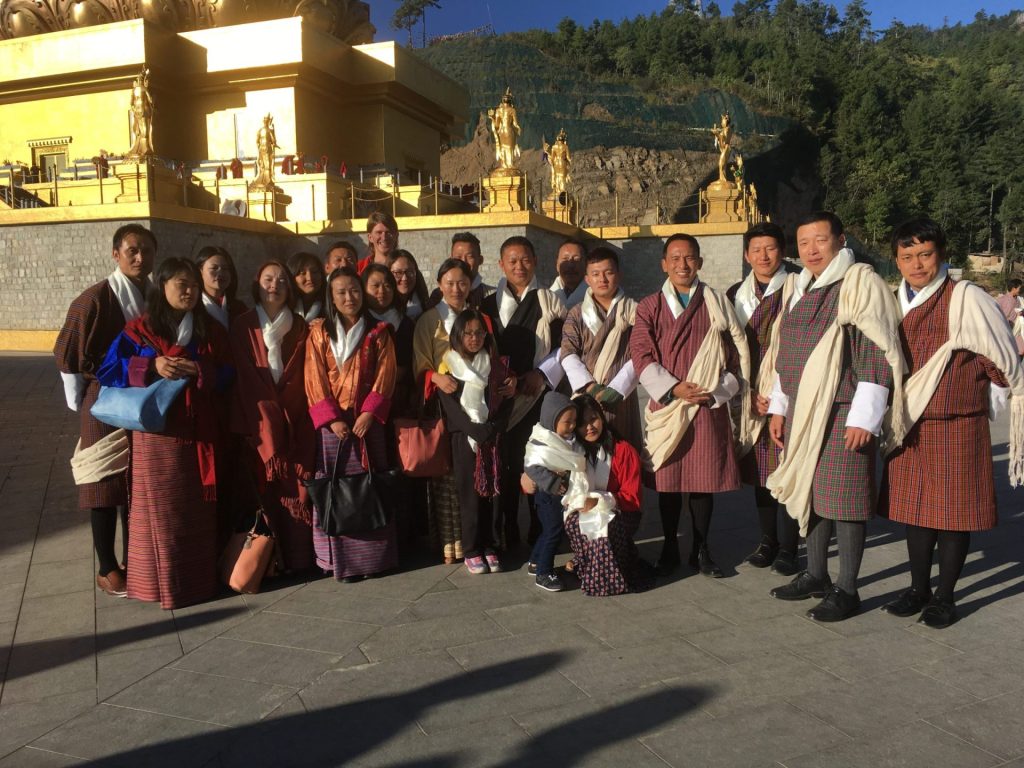
Most tour operators have a sustainability page. Ours starts with a footpath.
Sixteen seasons on the Lungchutse trail
In 2010 we adopted the trail that climbs from Dochula pass to the Lungchu-tsey temple. Two or three times a year, fifteen to twenty of us walk up together to clear litter and repair the path. In between, any guide working that route carries waste back down — not as a scheduled activity, just as the thing you do.
Sixteen years of that now, with no funding, no press release and no obligation to anyone. We put it first because it is easy to check and impossible to fake: anyone who walks up from Dochula can see whether the trail is clean.
Two or three organised clean-ups a year, 15–20 volunteers each time — plus every guide who happens to be on the route in between.
What we are accountable to
- Department of Tourism, Bhutan
- Licensed tour operator, No. 121132112
- Association of Bhutanese Tour Operators
- Member
- Bhutan’s own tourism policy
- High value, low volume, and the Sustainable Development Fee, which we neither lobby against nor treat as an inconvenience
On the trail
Trekking is where a company’s practices either exist or don’t, because nobody is watching.
- Boiled and treated water on trek, never bottled. We do not carry plastic into places with no way to remove it.
- LPG for all trek cooking, and no open campfires. Where warmth is genuinely needed at altitude, it comes from a contained stove — never a fire ring in the ground.
- Designated campsites only.
- Everything carried in is carried out — including what previous groups left behind.
- National park regulations observed without exception.
- Our own pack animals from the ranches at Tang and Gangtey: conditioned, properly loaded, handled by people we employ rather than hired by the day.
The people who work for us
Our guides average ten years with us. Many of our drivers, and several of the office staff, have been here since 2006 — twenty years. That is not loyalty — it is a consequence of how they are paid and how they are treated.
- Ten guides on full-time, year-round salaries — not seasonal contracts.
- Insurance for guides and trek crew.
- A share of each year’s profit paid to permanent staff as bonuses.
- Five working partners, all Bhutanese, all in the business day to day.
- Office hours are real hours. Outside them we answer for emergencies — a guest who needs us — not for routine work, and nobody is expected to be reachable all evening.
- An annual camping trip for the whole team, where the people who run camps for a living get to be the ones camped for.
In the villages
Tourism money reaches communities only if you deliberately route it there.
- We source food and services locally, and employ locally.
- We use community-based tourism and locally owned lodging wherever it exists.
- We buy from Bhutan’s handmade paper and weaving industries.
- We route trips through less-visited areas to spread spending beyond the Paro–Thimphu–Punakha corridor.
Please don’t give sweets, money or pens to children
Handouts teach children that visitors are a source of income, and keep them by the roadside waiting for the next vehicle instead of at school. If you want to give — and many guests do — give to a school or a community body, through us or directly. We will arrange it and show you where it went.
What our guides are held to
Every Wind Horse guide works to a written code of conduct. These are the points that affect you most directly.
- No commission stops. Guides take nothing from shops and may not steer guests toward businesses that pay commission.
- No alcohol or drugs while on duty.
- Phones away while working.
- Equal service to every guest in a group, regardless of who booked or what they paid.
- Accuracy over invention — a guide who does not know says so.
- Guest privacy respected. Nothing shared, nothing posted without permission.
- No inappropriate familiarity with guests, ever.
- Risk avoided rather than managed; emergencies reported immediately.
- Punctuality and honesty in every dealing.
- Guest safety takes precedence over the itinerary.
- Impartiality between guests, suppliers and communities.
- Appropriate dress and conduct at dzongs, temples and in villages.
- Environmental and cultural responsibility on every trip, not only on treks.
- Loyalty to the company and to our overseas partners.
- Continuing study — guides are expected to keep learning, not to repeat a script.
- Full compliance with Department of Tourism regulation.
- Conflicts handled calmly and escalated to the office, never argued in front of guests.
If we get it wrong
We would rather fix something on day four than read about it on day fourteen.
- While you are travelling, a manager or partner checks in with you directly. You have their mobile number.
- Call us and we reimburse the call charge.
- Most Bhutanese hotels hold our contact details, so you can reach us from reception at no cost.
- In country, we would always rather resolve it in person.
- Written complaints need your name, contact details, the trip and your guide’s name. Anonymous complaints are logged but cannot be investigated.
Now the country itself
You have read how we work. These are the three places most guests go next.
- Trekking
- Culture
- Walking
- Wildlife
- Cycling
- Festivals
- 1–5 days
- 6–10
- 11–14
- 15+