Taktsang – Tigers Nest
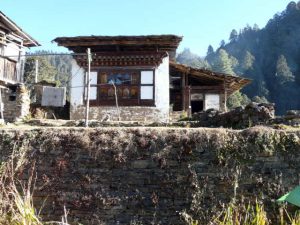
Pelphung Monastery
No journey to Bhutan is complete without a visit to Taktsang Monastery, famously known as the Tiger’s Nest—the country’s most iconic and sacred landmark. Perched dramatically on the edge of a 900-meter cliff at an altitude of 3,120 meters (10,240 ft), it overlooks the serene Paro Valley, offering one of the most breathtaking sights in the Himalayas. Beyond its spectacular setting, Taktsang embodies Bhutan’s spiritual essence and serves as a powerful symbol of faith and devotion.
Legend and Spiritual Significance
According to legend, Guru Padmasambhava—revered in Bhutan as Guru Rinpoche, the great saint who introduced Buddhism to Bhutan in the 8th century—flew to this site from Tibet on the back of a tigress to subdue malevolent spirits opposing the spread of Buddhism. The tigress is said to have been one of his consorts, Yeshe Tsogyal, transformed through his spiritual powers.
Guru Rinpoche meditated in a cave here for three years, three months, three weeks, three days, and three hours, sanctifying the site and transforming it into a powerful center of spiritual energy. Since then, many great masters, including Pelkyi Singye, Milarepa, and Phadampa Sangye, have meditated here, deepening its sacred legacy.
History and Architecture
The monastery complex, officially known as Taktsang Palphug Monastery, was first constructed in 1692 by Gyalse Tenzin Rabgye, the ruler of Bhutan at the site of smaller shrine. Built directly into the granite cliffs, the structure seems to defy gravity, its whitewashed walls and gilded roofs blending harmoniously with the surrounding rock face and forest.
Taktsang comprises four main temples and several smaller shrines and living quarters connected by stairways and courtyards. The central temple, Pelphug Lhakhang, houses the sacred meditation cave of Guru Rinpoche, concealed behind an intricately carved wooden grille that is opened only once a year or during special ceremonies.
Above the main monastery lie additional meditation sites with temples of monasteries such as Machigphu, Zangdopelri, Ugyen Tsemo, and Oezergang, each with its own spiritual importance. Another hermitage, Dolephu, appears across the rock face but can be reached only via a different route.
Over the centuries, Taktsang has faced several fires, most notably in 1951 and 1998, but has been meticulously restored with royal patronage and national devotion, preserving both its architectural splendor and deep spiritual heritage.
The Hike to Taktsang
A visit to Taktsang is not just sightseeing—it is a pilgrimage of the heart. The journey begins with a short drive to the trailhead at 2,600 meters (8,530 ft), followed by a scenic trek through pine and oak forests adorned with prayer flags and occasional rest spots overlooking the Paro Valley below.
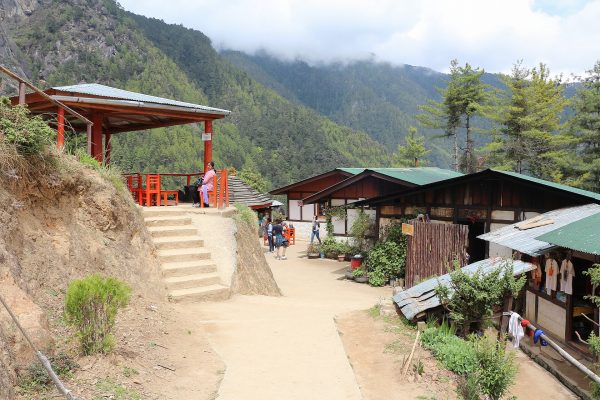
After about an hour, hikers reach the cafeteria viewpoint, the first and most popular rest stop, offering a distant yet inspiring view of the monastery clinging to the cliffs. For those preferring a lighter hike, horses are available up to this point. Continuing for another 45 minutes, the trail ascends to the second viewpoint, directly across a deep ravine from the monastery, offering a stunning, up-close panorama.
A final descent down stone steps leads to a bridge and waterfall, followed by a steep climb up to the monastery complex itself. The entire round-trip hike typically takes 4–6 hours, depending on pace and time spent exploring the site.
Visiting Experience
Inside Taktsang, the air is filled with the scent of incense and butter lamps, and walls are adorned with ancient murals depicting scenes from Guru Rinpoche’s life. Monks chant softly in the background, adding to the monastery’s serene and mystical atmosphere.
For Bhutanese pilgrims, visiting Taktsang at least once in a lifetime is a cherished aspiration, symbolizing devotion and perseverance on the path toward enlightenment. For travelers, the experience is equally profound—a perfect blend of natural beauty, spiritual depth, and cultural insight that leaves an indelible impression.
Trips that visit Taktsang – Tigers Nest
- Snow Leopard Jomolhari TrekDay 13: In Paro (Taktsang) 14 days
- Bhutan Festival & Sikkim TourDay 14-15-16: In Paro valley and hike to Taktsang 17 days
- Drukyul Walking Tour BhutanDay 12: Paro (Hike to Takstang) 13 days
- Three Himalayan KingdomsDay 14: Hike to Taktsang Monastery 15 days
- Bhutan Dragon Festival TourDay 11: Thimphu - Paro (Hike to Takstang) 12 days
- Window to BhutanDay 6: Paro Valley (Takstang Monastery Hike) 7 days
- Introduction of India, Bhutan & NepalDay 15: Hike to Taktsang monastery 19 days
- Highlights of Bhutan TourDay 9: Paro (Taktsang Hike) 10 days
Near Taktsang – Tigers Nest
Other places within 15 km.
-
Restaurants
Taktsang Cafeteria
The halfway stop on the Tiger's Nest hike, with butter tea, milk tea, khapse biscuits and a simple Bhutanese buffet at mealtimes, and views of the monastery.
-
Temples & Monasteries
Ugyen Tsemo
The Ugyen Tsemo temple is located 220 meters higher and directly above Taktsang on the summit of the cliff. Ugyen' refers to Taktsang, and 'Tsemo' means 'on the…
-
Sight
Bumdrak -Taktsang-Paro
Enjoy the sunrise view, climb higher to the peaks, or hang prayer flags.
-
Temples & Monasteries
Bumdrak
Bumdrak temple is located at an elevation of 3800m, above Paro Taktsang Monastery in Paro. Bumdra or Bumdrak literally means "hundred thousand footprints on a cliff".